
Two Systems for Worcester County Public Records
Massachusetts public access runs on two tracks that often get confused. The first is the Public Records Law. It covers state and local agencies, such as the sheriff and the Registry of Deeds. The second track covers court case files, which the Trial Court manages under its own rules, statutes, and impoundment orders. That split matters in a real way. A request to the Worcester County Sheriff for booking policy follows the Public Records Law. A request for a certified criminal docket goes to the court clerk and is controlled by court-record rules instead.
The Public Records Law gives the public a right to ask any state or municipal agency for its nonexempt records. The law sets out how the agency must respond, what it may charge, and how a denial can be challenged. Massachusetts General Laws c. 66, § 10 is the core request statute. It is the rule that turns a written ask into a legal duty to respond. Court files do not work the same way, which is why a single Worcester County public records request will not always reach every record you want.
Where to start depends on the record. Deeds and land plans come from the Worcester Registry of Deeds. Marriage, birth, and death records come from city and town clerks and the state vital records office. Court dockets and judgments come from the clerk of the Trial Court department that held the case. For court files, the Worcester County court records page covers the search path in full.
The official text of the request statute is published by the state legislature. The lead-in below links to the page where it lives, so the source can be read in full.
The statute page on the state legislature site lays out the request right in plain legal language. See Massachusetts General Laws c. 66, § 10 for the official source.
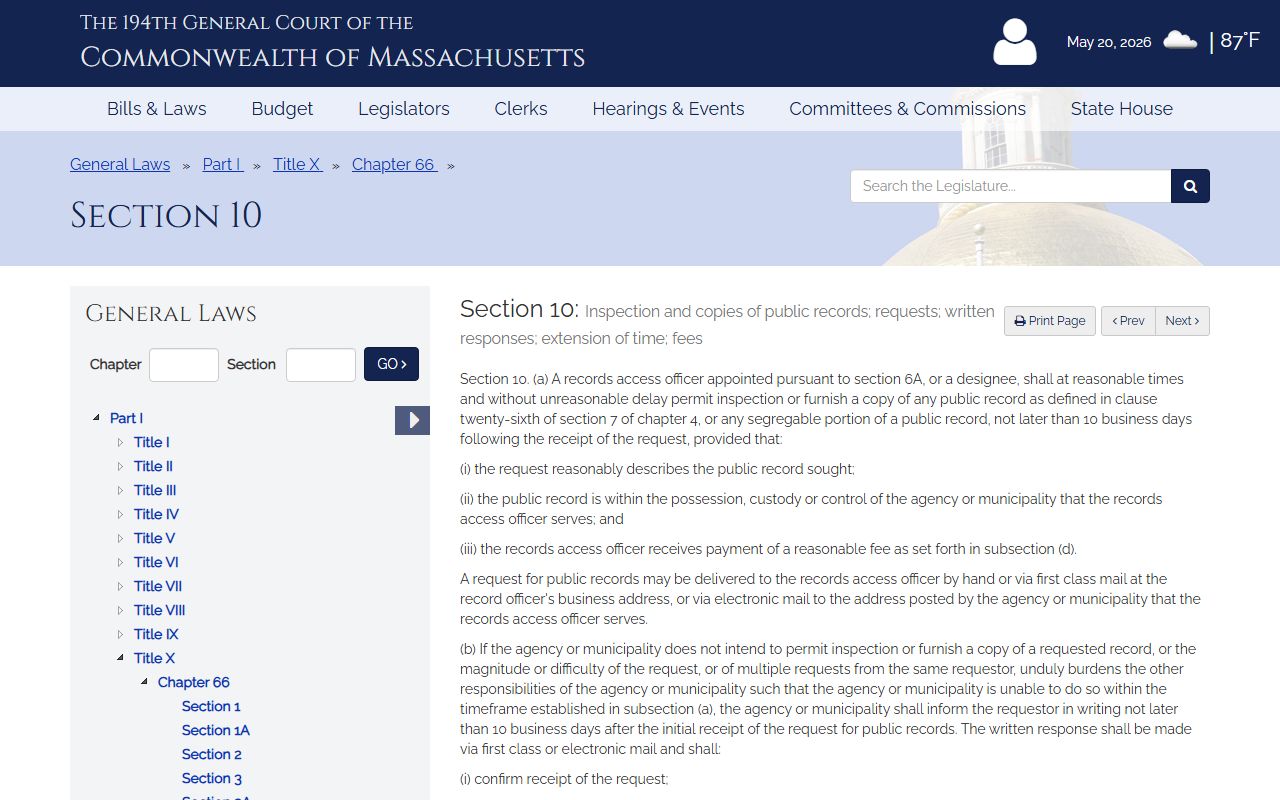
That same statute sets the response steps an agency must follow once a request lands, which is why it anchors almost every Worcester County public records request.
What Worcester County Public Records Exist Beyond Courts
Court dockets are only one slice of the public record. Worcester County agencies hold many other files that the public can request. Land records sit with the Registry of Deeds. Vital records sit with city and town clerks and the state. The sheriff holds agency policy and administrative records. Each office runs its own search tool and its own request process, so the right starting point depends on the record type.
The records most people look for fall into a few groups.
- Land records - deeds, mortgages, homestead declarations, liens, and recorded plans held by the Worcester Registry of Deeds.
- Vital records - marriage, birth, and death records held by city and town clerks and the state Registry of Vital Records and Statistics.
- Sheriff and jail agency records - policies, administrative files, and other nonexempt records under the Public Records Law.
- Court case files - dockets, judgments, and filings held by the clerk of each Trial Court department.
- Local agency records - city and town files held by municipal records access officers across the county.
Deeds and other land instruments are recorded, indexed, and made searchable online. The Worcester Registry of Deeds posts its index through MassLandRecords, where the public can search by name, book and page, instrument number, or property. A deed search shows the owner of record, the chain of title, mortgage history, and any recorded lien or homestead. For marriage records, the path begins with the city or town where the marriage intention was filed. Statewide vital-record copies can be ordered through the Registry of Vital Records and Statistics.
The Worcester Registry of Deeds runs through the statewide MassLandRecords system. The lead-in below links to that portal so a land search can start from the official source.
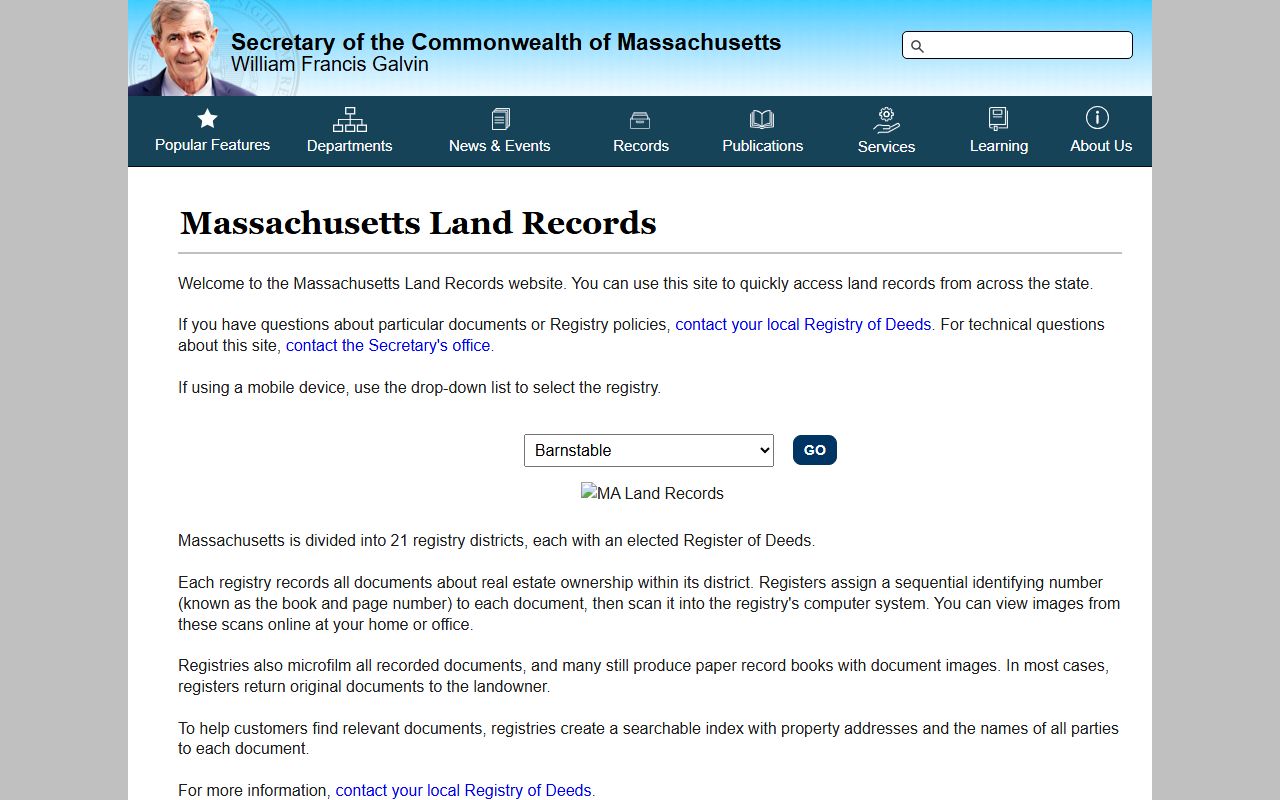
Visit MassLandRecords to search recorded deeds, mortgages, and plans for the Worcester District and Worcester Northern District registries.
How to File a Worcester County Public Records Request
A Public Records Law request does not need a special form. You can ask in writing, by email, or by mail, and many agencies also take a request in person. The key is a clear, written description of the records you want. Every agency names a records access officer to handle requests, and that officer is your main contact. A good request is specific. It names the office, describes the records, and gives a date range or subject when you can.
- Find the right office. Land records go to the Worcester Registry of Deeds, vital records to the city or town clerk, and agency files to the sheriff or other agency records access officer.
- Write a clear request. State the records you want, with dates, names, or subject details that help the office find them fast.
- Give your contact information. Include an email or mailing address so the office can respond and quote any fee.
- Pick a delivery method. Ask for email, mail, or in-person inspection of the records.
- Send it to the records access officer. Submit by the agency's listed method, such as a web form, email, or mail.
- Watch for the response. The office must respond within the statutory timeline and tell you of any fee or exemption.
- Appeal if denied. A denial of agency records can be appealed to the Supervisor of Records under Massachusetts General Laws c. 66, § 10A.
The appeal route is a real protection. If an agency refuses a record, charges too much, or fails to answer, Massachusetts General Laws c. 66, § 10A lets you appeal to the Supervisor of Records in the Secretary of the Commonwealth's office. The Supervisor can order the agency to produce the record or to lower a fee, and a court can enforce the law if the agency still will not comply.
Court records work on a different track. A request for a certified docket or judgment goes to the clerk of the Trial Court department that held the case, not to a records access officer. The Clerk of Courts page explains how to ask the right clerk for a certified court copy.
What a Public Records Request Should Include
The Worcester County Sheriff's Office posts an online public records request page that shows the fields a typical agency request asks for. The list works as a guide for almost any Massachusetts office, since the Public Records Law sets the same basic duties statewide. A request that fills these fields well is easier for an office to answer, which can speed up the response and cut the fee.
The sheriff's request page collects the fields shown below. The lead-in links to that page so the live form can be reviewed.
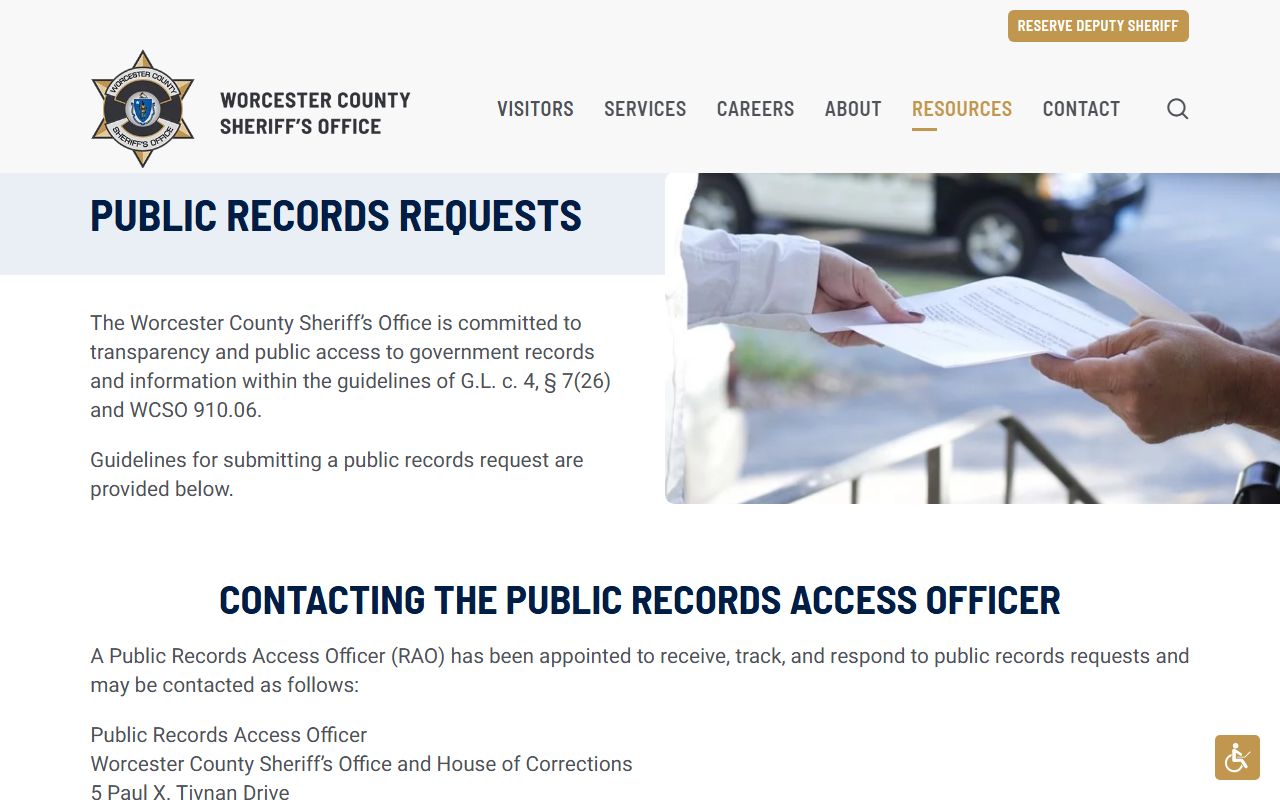
Use the official Worcester County Sheriff public records request page to submit an agency request, then match your details to the field table here.
| Field | Required | Notes |
|---|---|---|
| Requester name | Identifies the requester | Used to tie the response back to who asked. |
| Contact information | Needed for a reply | Email or mailing address needed for the response. |
| Description of records sought | Yes in practice | Must reasonably describe the records. |
| Preferred delivery method | Optional | Email, mail, inspection, or another method may be asked for. |
| Date range / subject / incident details | Optional but important | Narrows the search for responsive records. |
| Submit / send | n/a | Sends the request to the records access officer. |
Note: A clear date range and subject can be the difference between a fast answer and a long search fee, so add them whenever you can.
Fees for Worcester County Public Records
Massachusetts does not set one flat fee for every public record. Agency record fees follow the Public Records Law and its regulations, while court-copy fees follow court and department schedules. Land-record and vital-record copies follow separate registry and city or town schedules. Because the amount depends on the office, the copy type, and the work involved, the safest step is to confirm the current charge with the office before you pay.
The general fee picture across the county breaks down like this.
| Record Type | Office | Fee Notes |
|---|---|---|
| Agency records | Sheriff or other records access officer | Fees follow the Public Records Law and regulations, within statutory limits. |
| Plain court docket copy | Relevant Trial Court clerk | Fees vary by department and copy type; check the clerk or Trial Court fee schedule. |
| Certified court copy | Relevant Trial Court clerk | Certification fee applies in addition to per-page copy charges where charged. |
| Land record image or certified copy | Worcester Registry of Deeds | Registry and state recording or copy fee schedules apply. |
| Marriage certificate | City or town clerk or RVRS | Local clerk and state vital-record fees apply. |
Under the Public Records Law, an agency can charge for the cost of copies and, in some cases, for staff time spent on a large search. The law caps these charges, and an agency must give an itemized estimate before doing costly work. If a fee looks too high, you can ask the office to explain it and, if needed, raise the fee on appeal to the Supervisor of Records.
Response Timelines and Appeals
The Public Records Law puts an agency on the clock. Once a written request lands, the records access officer has a set window to respond. The office must either produce the records, point you to where they are public, or explain in writing why a record is withheld. If the office needs more time for a large or complex request, it must say so and give a reason and a plan. Silence is not an option the law allows.
When an agency denies a record, charges an unfair fee, or misses its deadline, the next step is an appeal. Massachusetts General Laws c. 66, § 10A gives the public the right to appeal to the Supervisor of Records, who reviews the agency's response and can order it to comply. If the agency still refuses, the law allows a court action to enforce the order. This appeal path applies to agency records. Court-record problems, such as a sealed file or an impoundment order, follow a different route through a motion or clerk and judge review.
For a denial tied to a court case file rather than an agency record, the fix usually runs through the court itself. The Worcester County court records page and the clerk's office can explain how to ask a judge to review access to an impounded or restricted file.
Exemptions and Redactions
Not every record is open. The Public Records Law defines what counts as a public record and then lists the exemptions that let an agency withhold or redact parts of a file. Massachusetts General Laws c. 4, § 7, clause 26 is the definition statute. It sets out the categories an agency may keep back, such as personal privacy data, certain investigatory material, some personnel records, and security-sensitive information. An exemption does not always hide a whole file. Often the office releases the record with the protected parts redacted.
Common protected items show up across many record types. The list below covers the categories you are most likely to meet.
- Personal privacy data, such as some home addresses and personal identifiers.
- Social Security numbers and financial account numbers, which are redacted.
- Investigatory records where release could harm an active enforcement effort.
- Certain personnel and medical information held by an agency.
- Security-sensitive material, such as some building or operational details.
The definition statute is the place to read the exemption list in full. The lead-in here links to it. See Massachusetts General Laws c. 4, § 7 for the official text of the public-records definition and its exemptions.
Court files have their own protected zones that run separate from the agency exemptions. Juvenile records, adoption files, sealed criminal records, mental-health commitments, and impounded affidavits are kept from the general public by statute and court rule. Sealing is more common in Massachusetts than expungement, and eligible records may be sealed after a waiting period. The Worcester County arrest records page covers sealing and what stays restricted in a criminal file.
Land Records and the Land Court
Land records are some of the most-requested Worcester County public records. The Worcester Registry of Deeds records and indexes deeds, mortgages, homestead declarations, liens, and recorded plans, and posts the index through MassLandRecords. Most recorded land in the county is searchable by name, book and page, instrument number, recorded date, or property. A title search built from these records shows the owner of record and the chain of title.
Some property in Massachusetts is registered land, which is handled by the statewide Land Court rather than ordinary recording alone. The Land Court oversees registered-land certificates, tax-title foreclosure, title disputes, and certain foreclosure petitions. Registered-land records carry a certificate of title, and changes to that title run through the Land Court process. For Worcester County property, the registered-land side connects back to the local registry district that serves the parcel.
The Land Court is a statewide trial court with its own state agency page. The lead-in below links to it so the court's role can be reviewed.
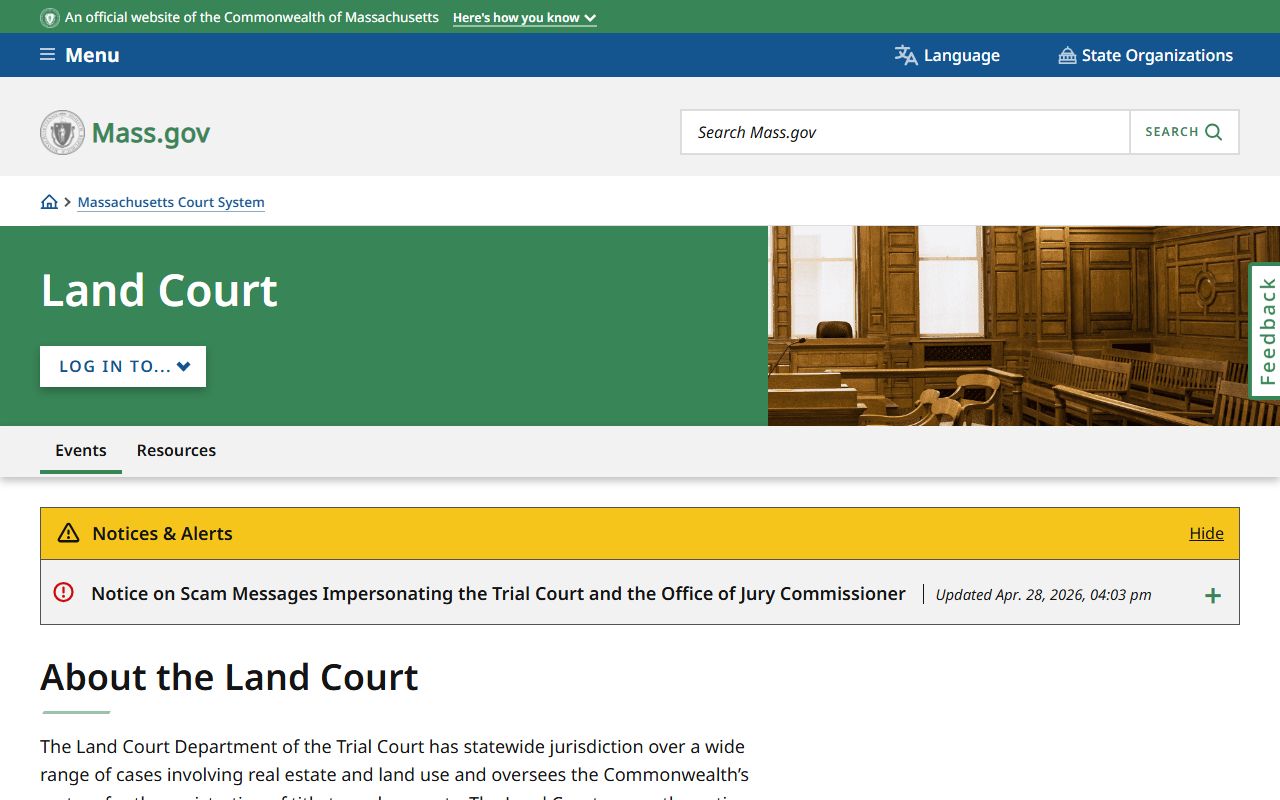
See the official Massachusetts Land Court page for how registered land, tax-title, and title matters are handled across Worcester County.
Definitions:
- Deed
- The recorded document that transfers ownership of real property.
- Homestead
- A recorded declaration that protects a share of home equity from some creditors.
- Registered land
- Property whose title is certified and tracked through the Land Court.
Public Records Law vs Court Records
The clearest way to avoid a wrong turn is to compare the two access systems side by side. The Public Records Law governs agency files. Court-record rules govern case files. They use different request methods, different fee rules, and different appeal paths. The table below lays out where each one applies.
| Point | Public Records Law | Court Records |
|---|---|---|
| Covers | State and local agencies, sheriff, Registry of Deeds | Trial Court case files and dockets |
| Main rule | G.L. c. 66, § 10 and c. 4, § 7 | Trial Court Rule XIV and case statutes |
| Where to ask | The agency's records access officer | The clerk of the court department |
| Appeal path | Supervisor of Records under § 10A, then court | Motion or clerk and judge review |
| Fees | Set by the Public Records Law and regulations | Set by court and department schedules |
The takeaway is simple. If the record is held by an agency, the Public Records Law and its § 10A appeal apply. If the record is a court case file, you go to the clerk and the court's own rules. A request sent to the wrong track is a common reason for delay, so picking the right one first is worth the moment it takes. For the marriage and divorce side, which mixes a local-clerk vital record with a Probate and Family Court case file, see the Worcester County marriage and divorce records page.