
The Worcester County District Court System
District Court is one department of the Massachusetts Trial Court. It is a court of limited jurisdiction, which means it hears certain case types up to set limits, not every matter. In Worcester County, the work is divided among ten District Court divisions. Each division serves a group of nearby towns. A case is normally filed in the division that covers the town where the event happened or where a party lives. The downtown Worcester division is the largest, but the branch courts handle a heavy share of the county's criminal, civil, and small-claims load.
Massachusetts trips up people who come from other states. Here the District Court is a lower trial court, not the main one. The general trial court for serious crimes and large civil suits is the Superior Court. So a felony indictment and a shoplifting charge can both touch the courts, but they often live in different departments. Knowing that split saves time and avoids a search in the wrong place.
The state's official District Court department page sets out the full scope of its work. The Massachusetts court system page gives the wider map of how the departments fit together.
Worcester County District Court Divisions
Ten District Court divisions sit inside Worcester County. Only the courts in downtown Worcester share the 225 Main Street address. The branch divisions each keep their own clerk-magistrate office and visitor details on an official Mass.gov location page, so the location page is the best place to confirm the address, phone, and hours before any visit. The table below lists each division, the area it serves, and a link to its official page.
| Division | Area served | Official page |
|---|---|---|
| Worcester District Court | Worcester; 225 Main Street, Worcester, MA 01608 | mass.gov |
| Fitchburg District Court | Fitchburg-area towns | mass.gov |
| Leominster District Court | Leominster-area towns | mass.gov |
| Clinton District Court | Clinton-area towns | mass.gov |
| Gardner District Court | Gardner-area towns | mass.gov |
| Dudley District Court | Dudley-area towns | mass.gov |
| Milford District Court | Milford-area towns | mass.gov |
| Uxbridge District Court | Uxbridge-area towns | mass.gov |
| Westborough District Court | Westborough-area towns | mass.gov |
| East Brookfield District Court | East Brookfield-area towns | mass.gov |
Filing in the right division matters. A traffic citation issued in a Fitchburg-area town is heard at the Fitchburg court, not in downtown Worcester. If you are unsure which court covers a town, the location page for each division lists the cities and towns it serves. Confirm before you mail a filing or show up in person.
How District Court Fits the County Courts
The District Court does not stand alone. It works alongside the Superior Court, the Probate and Family Court, the Housing Court, and the Juvenile Court, all part of the same Trial Court. The Superior Court is the general trial court for the county and sits in downtown Worcester. Many people start in District Court and then have a case bound over or transferred up. Seeing the Superior Court page helps frame where the line falls between the two trial levels.
The Massachusetts Superior Court department page describes the higher trial court that takes felonies and larger civil suits. View the official Superior Court department page for its full jurisdiction.
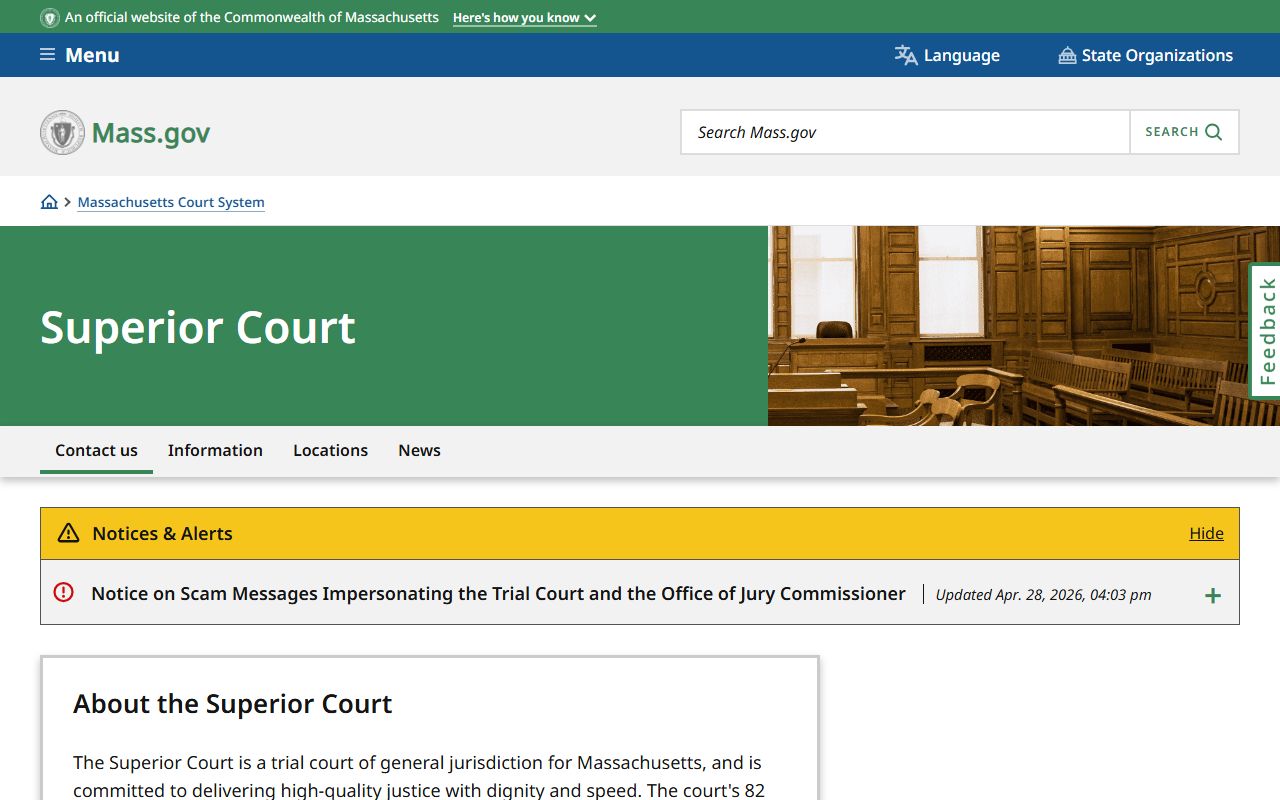
That page makes the split clear: the more serious or higher-value the matter, the more likely it lives in Superior Court rather than the District Court division.
What the Worcester County District Court Handles
District Court jurisdiction is broad but capped. On the criminal side it takes misdemeanors and many felony preliminary proceedings, including arraignment, bail, and probable-cause review. On the civil side it hears claims within its money limit, small claims, and many summary-process matters where the Housing Court is not used. It also handles traffic and criminal motor-vehicle cases, restraining-order proceedings, and clerk-magistrate hearings. Each of these record types can be found through the public case-search tools, and most can be requested as a certified copy from the division clerk.
The main categories of work in a Worcester County District Court division include the following.
- Criminal - misdemeanor complaints, arraignments, bail, pleas, and dispositions, plus early felony steps.
- Civil - money claims within the District Court limit, with motions, judgments, and supplementary process.
- Small claims - lower-value disputes filed on a simple statement of claim, with a faster, less formal hearing.
- Traffic - civil motor-vehicle citations and criminal motor-vehicle complaints, with responsible or not-responsible findings.
- Restraining orders - abuse-prevention and harassment-prevention matters, with some details protected.
For a deeper walk through how each file is pulled and read, see the Worcester County court records page and the court dockets page. Detailed criminal handling, including arrest data and sealing, is on the arrest records page.
Civil and Small-Claims Cases in District Court
Most civil disputes residents file end up in District Court. The court hears money claims within a set limit, while larger suits go to Superior Court. A civil case starts with a complaint, moves through service and answers, and can reach a judgment after a hearing or trial. Common entries include motions, default, judgment, and execution, which is the document used to enforce a money judgment.
Small claims is the simplest path. A person files a short statement of claim, pays a small fee, and gets a hearing date. The process is built for people without lawyers. A clerk-magistrate or a judge can hear it. If the claimant wins, the court enters a judgment and may order payment terms. The losing side in a small-claims matter has limited appeal rights.
The Fitchburg division is a good example of a busy branch court that carries this mix of civil and small-claims work. See the official Fitchburg District Court location page for its clerk office and visitor details.
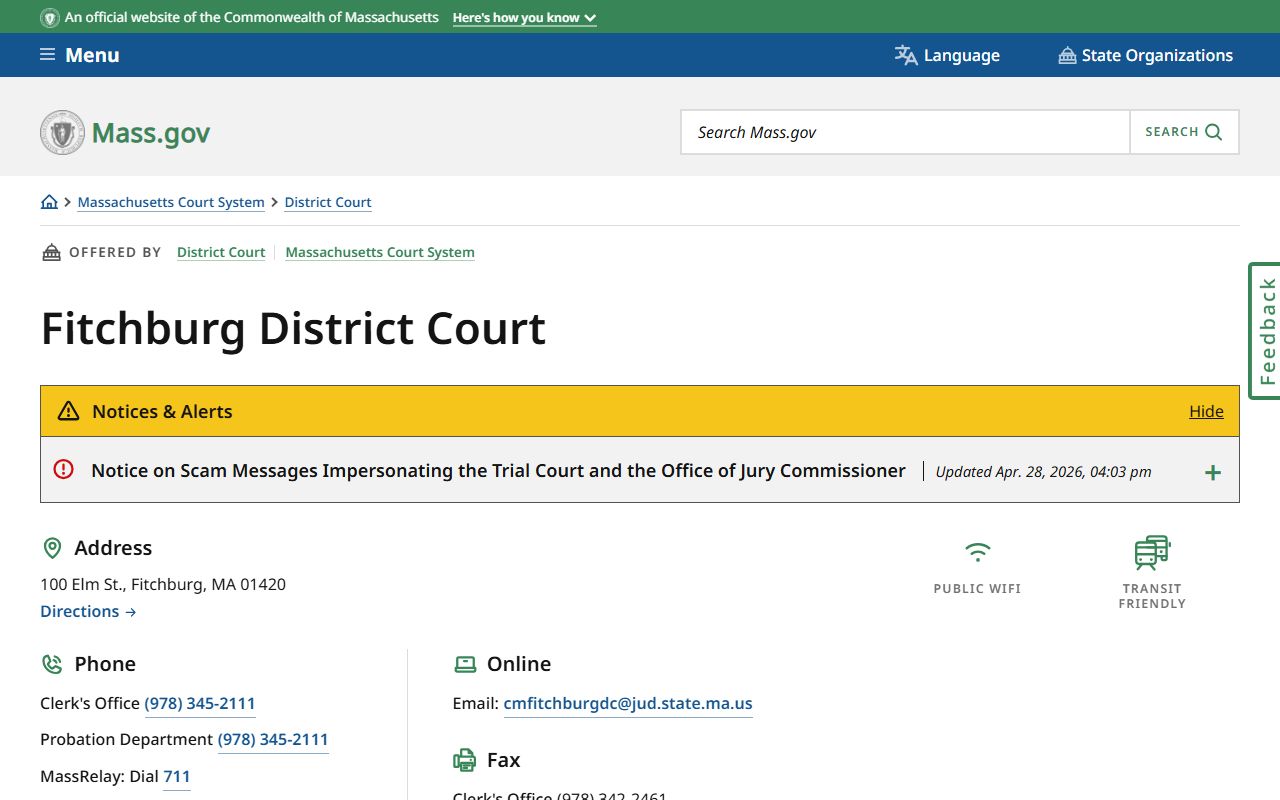
The location page lists the clerk-magistrate office, which is where civil and small-claims filings and copy requests are handled for that division.
Note: Small-claims money limits and filing fees are set by statute and Trial Court schedule, so confirm the current amounts with the division clerk before you file.
Criminal and Traffic Matters
Criminal work fills a large part of the District Court docket. The court handles misdemeanors from start to finish and takes the first steps in many felony cases before they move to Superior Court. A criminal file shows the complaint, the arraignment, bail decisions, pretrial events, any plea, and the disposition. The Commonwealth is the prosecuting party. An arrest or a charge is not a conviction, so always read the disposition before drawing a conclusion.
Traffic cases split into two tracks. Civil motor-vehicle citations get a responsible or not-responsible finding, often after a clerk-magistrate hearing. Criminal motor-vehicle complaints, such as operating under the influence, run through the criminal process. The court file and the state driver record are separate things. The Gardner division handles this mix for its area.
The Gardner District Court page shows the visitor and clerk details for that branch. Check the official Gardner District Court location page before filing or visiting.
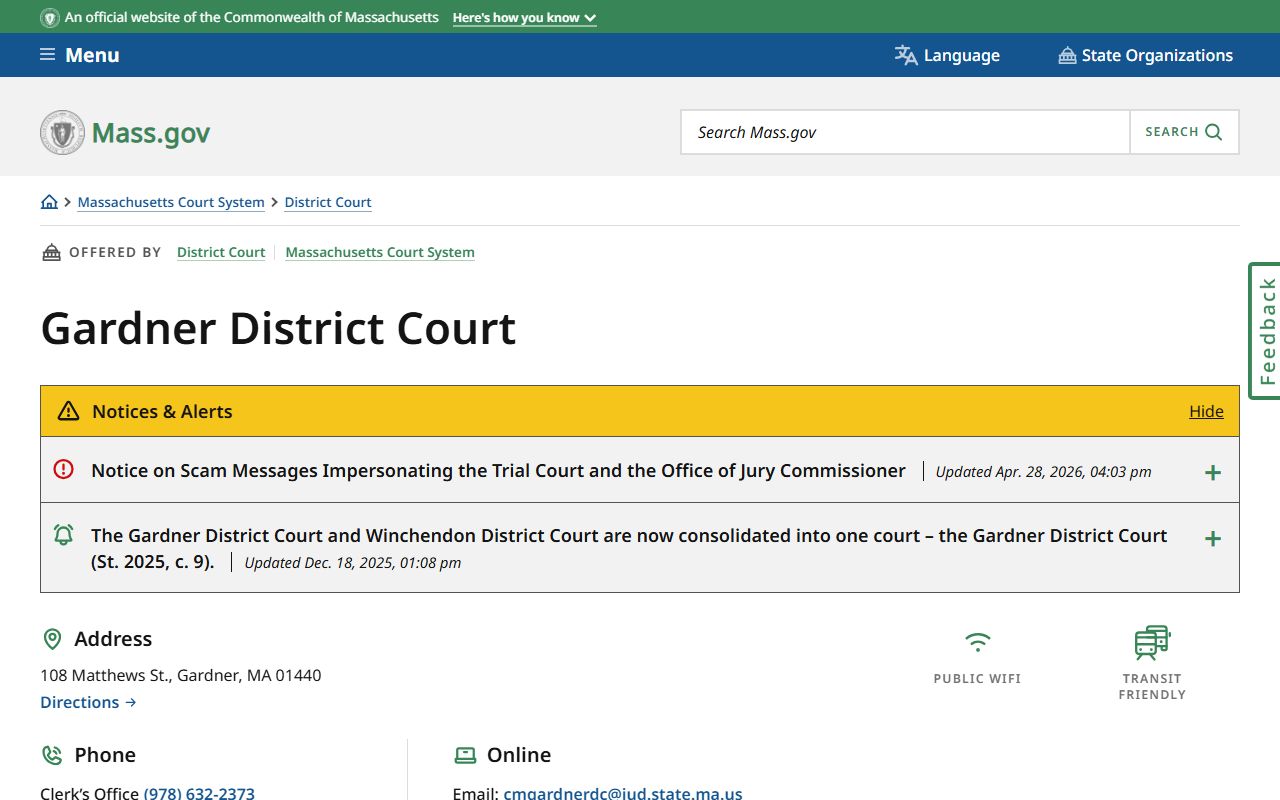
For the DUI and OUI track, the line between a traffic ticket and a criminal charge matters most, and the criminal route carries far heavier stakes.
More on tickets, citation lookup, and the driver-record split is on the traffic court records page.
Clerk-Magistrate Hearings and Restraining Orders
The clerk-magistrate is a District Court feature many people meet first. A clerk-magistrate can hold a show-cause hearing on an application for a criminal complaint. This is an early screening step. If the magistrate finds enough cause, a complaint issues and the case moves toward arraignment. If not, no complaint issues and there may be no public criminal record of the matter. Clerk-magistrates also handle small-claims hearings and many civil motor-vehicle citation appeals.
Restraining orders are another core District Court job. Abuse-prevention orders and harassment-prevention orders can be sought at the District Court, often on short notice. Some address and victim-identifying details in these cases are protected by statute and court rule, so the public docket may show limited information. The Dudley division handles these matters for its towns.
The Dudley District Court page lists the clerk office and hours for that branch. See the official Dudley District Court location page for current details.
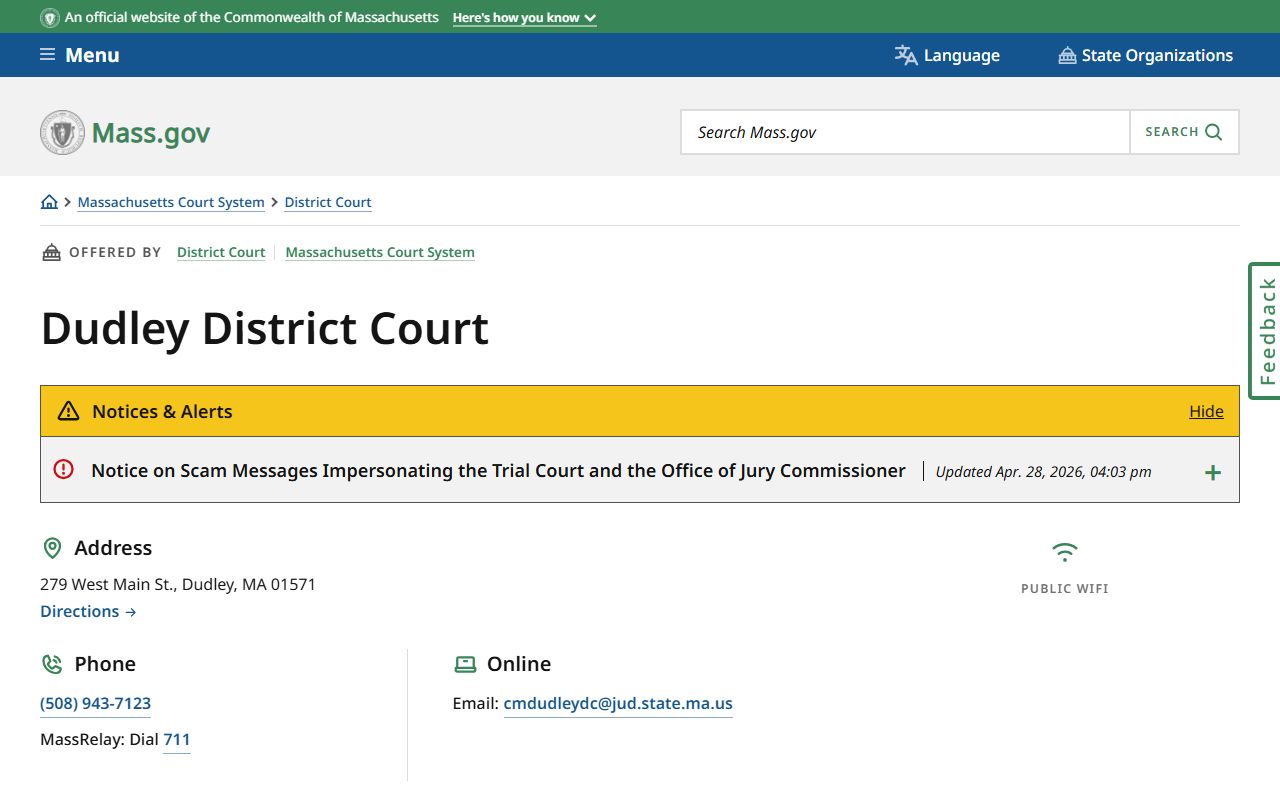
Because these cases can carry safety concerns, the clerk office is the right contact for filing steps and for what parts of a file are open.
District Court vs Superior Court
The clearest way to see where a Worcester County case belongs is to compare the two trial levels side by side. District Court takes the high-volume, lower-stakes matters. Superior Court takes the serious crimes and the large civil suits. The table below sets out the key differences.
| District Court | Superior Court |
|---|---|
| Limited-jurisdiction trial court | General-jurisdiction trial court |
| Misdemeanors and early felony steps | Felonies and serious crimes |
| Civil claims within a money limit | Larger civil suits and equity |
| Small claims and traffic matters | Medical malpractice tribunals and assigned matters |
| Ten divisions across the county | Sits in downtown Worcester |
Both courts feed the same appeal path, and both keep records the public can request. The split is about the size and type of the case, not about which one is more official.
Appeals and How a Case Moves
An appeal does not stay in the county. Most appeals from a Worcester County trial court go to the Massachusetts Appeals Court, the intermediate appellate court. From there, further review is possible at the Supreme Judicial Court, the highest court in the state. Some matters, such as certain first-degree murder appeals, follow special routes. A District Court criminal case can also move up to Superior Court in some situations before any appeal.
How a case moves through the system: District Court › Superior Court › Appeals Court › Supreme Judicial Court.
Read each step as a possible path, not a fixed track. Many cases end at the District Court level with a disposition and never go higher. Others are filed straight in Superior Court and never touch a District Court division at all. The Milford division is one example of a branch court where most cases begin and end without an appeal.
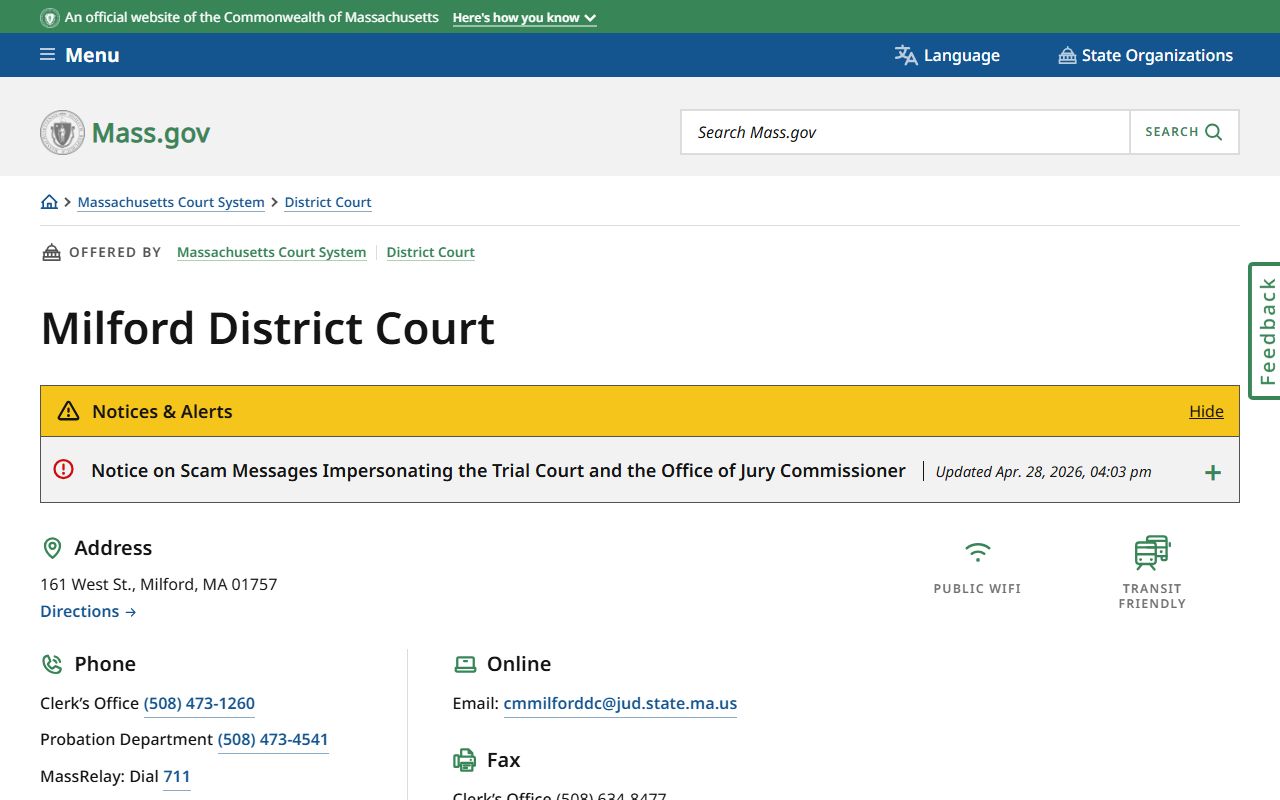
The official Milford District Court location page gives the clerk office and visitor details for that branch, the right starting point for a case filed there.
District Court Terms to Know
District Court dockets use words that can read like code. A short glossary helps when you open a case summary or a daily list. These terms come up across criminal, civil, and small-claims files in every Worcester County division.
- Arraignment
- The first criminal court event, where the charge and bail or release are addressed.
- Clerk-magistrate
- A court officer who can hold show-cause hearings, small-claims hearings, and citation appeals.
- Disposition
- The current or final outcome of a charge or case, such as disposed, dismissed, or open.
- Default
- A failure to appear or respond, which can trigger a warrant.
- Execution
- The document used to enforce a civil judgment.
For warrant entries tied to a default or a missed date, the warrant records page covers how those show up and what to do about them. Copy and certification questions for any division go to the Clerk of Courts page.